Policy Brief
Austrian Society for European Politics (ÖGFE) Publishes Policy Brief on Strategic Trade Union Cooperation in Central Europe
The policy brief identifies structural challenges that unions face as well as key priorities and avenues for strengthening international trade union cooperation in the region.
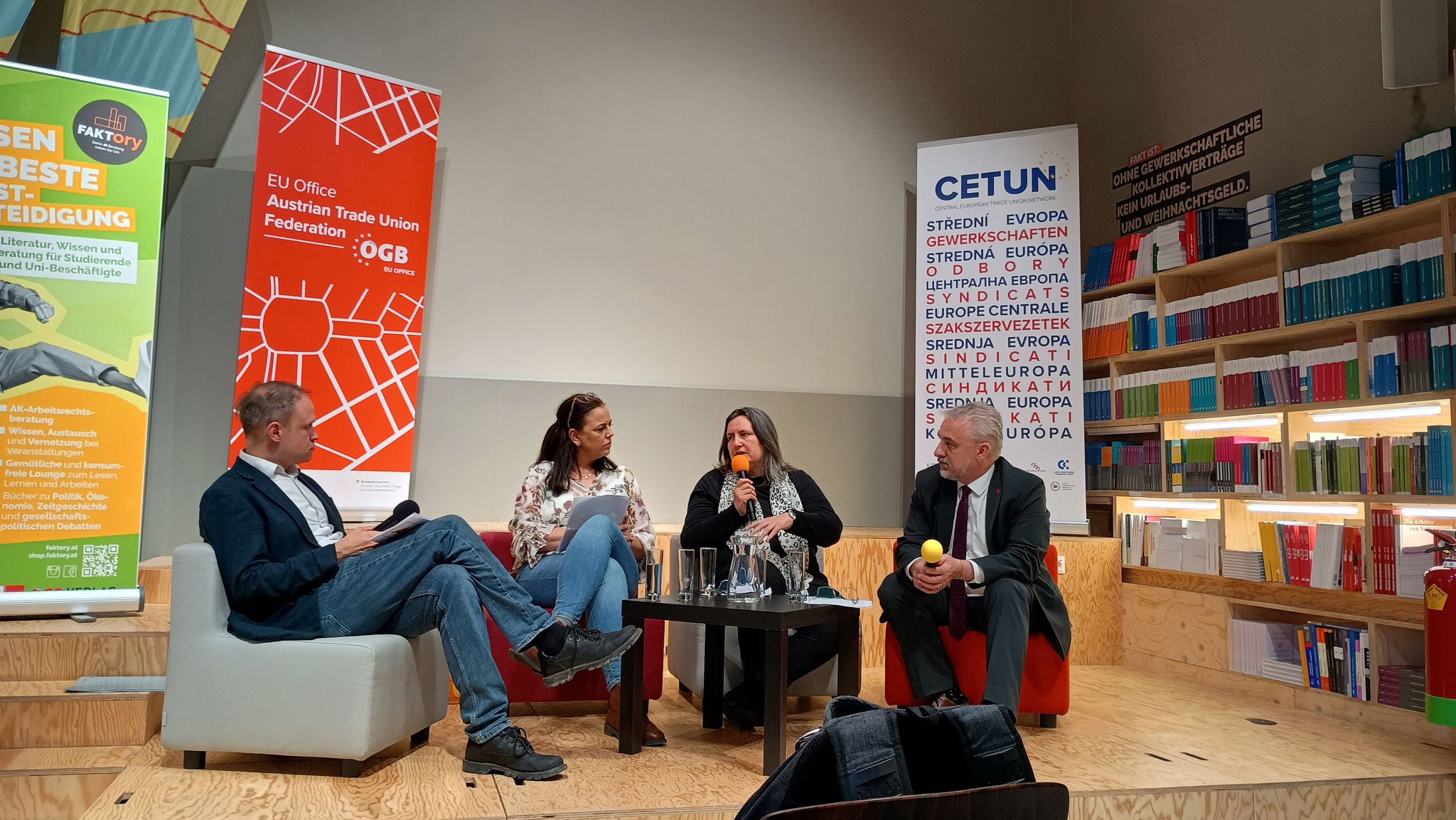
How can trade unions in Central Europe strengthen their influence in an increasingly challenging political, economic and social environment? A new policy brief by Tibor T. Meszmann and Marta Kahancová, published by the Austrian Society for European Politics (ÖGfE), explores how stronger international cooperation can help trade unions address shared challenges and reinforce their capacity at national and regional levels.
Drawing on research conducted for the Central European Trade Union Network (CETUN) in 2025, covering nine countries – Austria, Croatia, Czechia, Hungary, Liechtenstein, Serbia, Slovakia, Slovenia and Switzerland – the authors identify a remarkable degree of common ground among trade unions. Improving working conditions, strengthening occupational health and safety, supporting youth employment, tackling working poverty and responding to digital transformation emerge as shared priorities. At the same time, differences in national contexts and approaches to issues such as migration, climate change and gender equality underline the importance of mutual learning and cooperation.
The policy brief also examines the obstacles to effective cross-border cooperation. Unequal access to research, information and communication capacities, limited organisational resources, growing workloads and geopolitical tensions can all make joint action difficult. Competition for investment, production and employment opportunities may also create tensions between workers in different countries, including within the same multinational companies. Yet the authors argue that these pressures make international trade union solidarity more important, not less.
Importantly, the brief highlights practical examples of successful cooperation, including initiatives to organise and protect migrant workers in Croatia through partnerships with trade unions in North Macedonia. Such experiences demonstrate how sharing knowledge and organising practices across borders can improve working conditions, strengthen collective representation and benefit workers, trade unions and public institutions alike.
Looking ahead, the authors call for a more systematic approach to international trade union cooperation, based on stronger transnational communication, shared priorities, evidence-based action and sustained institutional commitment. Among their key recommendations is the organisation of a biennial, congress-style gathering with a rotating presidency, providing an opportunity to assess common challenges and agree on strategic commitments for the following two years.
Read the full brief to explore the research findings, practical examples and recommendations for building stronger and more effective trade union cooperation across Central Europe.